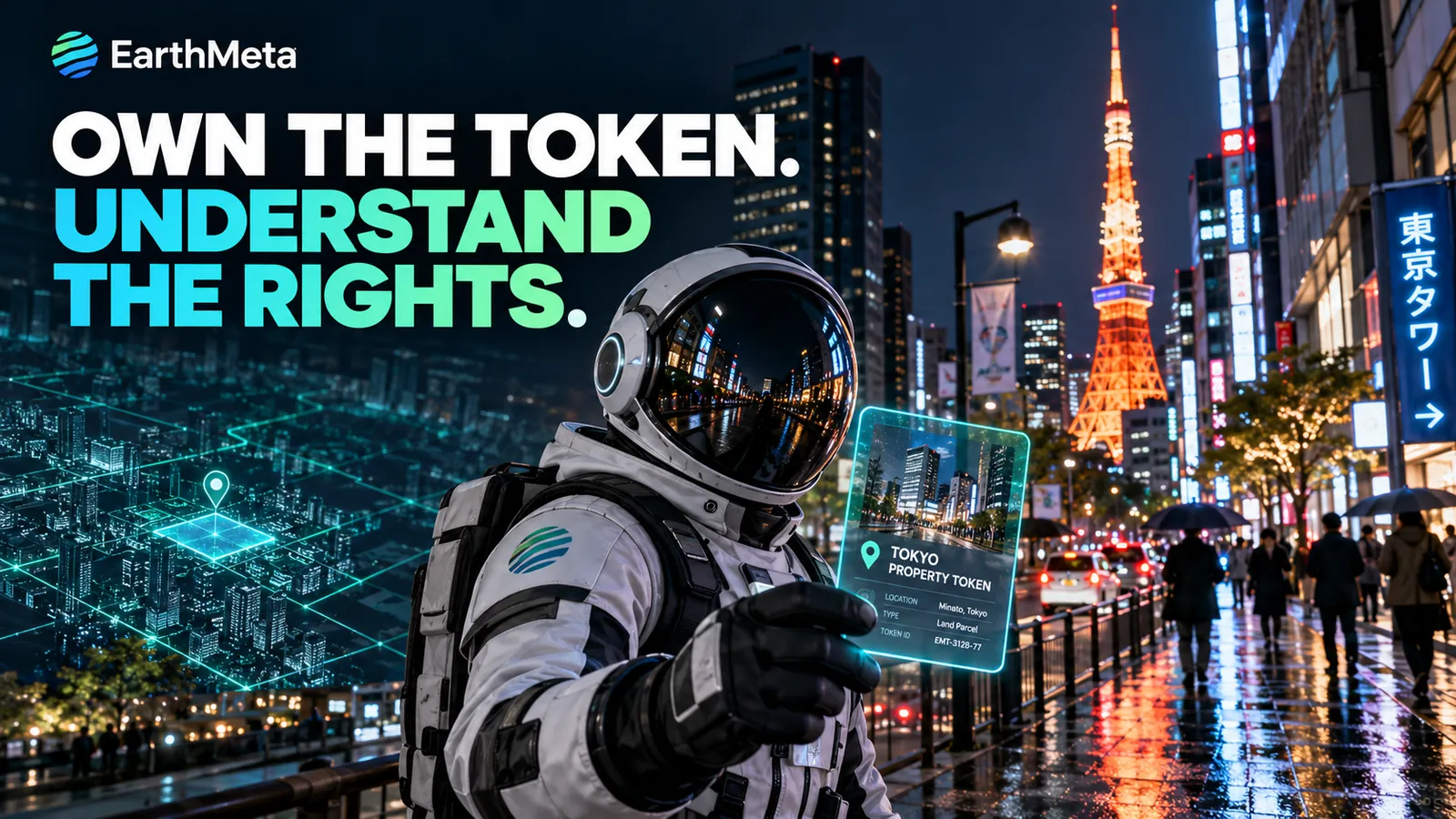
Imagine buying a rare jacket in a virtual world. You can wear it, show it off and perhaps sell it later. Now imagine the platform closes your account and the jacket disappears with it.
That is the ownership problem in one slightly dramatic wardrobe malfunction.
Traditional virtual worlds are very good at giving people access to digital things. A company keeps a database, records that your account has a sword, house, ticket or purple hat, and lets you use it under the platform’s rules. The system can work brilliantly. Roblox, Fortnite and countless online games have proved that people will happily buy virtual goods without a blockchain anywhere near the checkout.
NFTs solve a narrower problem. They let a virtual world represent a specific asset through a blockchain token that a wallet can hold, verify and transfer. Instead of the platform being the only place that can say “this belongs to Alex,” an open network can expose the current token holder through a standard smart-contract function.
That sounds simple. It is also easy to overstate.
An NFT can record control of a token. It does not automatically transfer copyright, guarantee that every app will support the asset or keep a project online forever. The useful question is not whether an NFT is “real ownership” in some philosophical sense. The useful question is: what rights, functions and dependencies come with this particular token?
This guide explains why virtual worlds use NFTs, what the blockchain actually records, why players and creators care, where the limits sit, and how EarthMeta turns ownership into an active part of a geo-accurate digital world rather than a decorative certificate.
The short answer: why do virtual worlds use NFTs?
Virtual worlds use NFTs because a non-fungible token can provide a unique, transferable and publicly verifiable ownership record for land, buildings, avatar items, names, tickets and other digital assets.
That record can support several useful actions:
- A wallet can hold the token independently of a normal username and password.
- A marketplace can verify who is allowed to sell it.
- A virtual world can read the wallet and unlock the corresponding land, item or permission.
- Another compatible service can inspect the same token without receiving a private database export.
- A creator can issue limited editions and let later buyers trace the token’s transaction history.
- A community can use token ownership as a qualification for access, governance or rewards.
The NFT is therefore best understood as a portable ownership and permissions record. The 3D model, intellectual property, platform experience and commercial rights are connected layers, but they are not automatically contained inside the token.
What an NFT proves, and what it does not
| Question | What the NFT can establish | What still depends on other rules or systems |
|---|---|---|
| Who controls the token? | The current wallet address returned by the smart contract | Whether that wallet belongs to the person who claims it does |
| Can it be transferred? | The contract’s transfer functions and on-chain history | Platform restrictions, sanctions, security checks and local law |
| Is it unique? | A particular contract address and token ID | Whether the linked artwork or model has unauthorized copies elsewhere |
| What does it represent? | Metadata and the project’s documented mapping | Whether the platform continues to honour that mapping |
| Can it unlock access? | A world can verify wallet ownership | The experience must be online and coded to recognize the token |
| Does the buyer own copyright? | Usually nothing by itself | The creator’s licence, terms and applicable intellectual-property law |
| Is it interoperable? | Other apps can read a public standard | They still need compatible files, rules, animations and permission to use them |
This distinction is the foundation of sensible NFT ownership. The blockchain answers a precise question. The product and its terms answer the rest.
How large is the market behind virtual ownership?
There is no single clean number for the “virtual-world NFT market.” Analysts often mix NFT trading, gaming items, metaverse tokens, avatar goods, virtual land and conventional in-app purchases. Those categories overlap, and some of the largest virtual economies do not use public blockchains at all.
The better approach is to read several indicators without pretending they measure the same thing.
Roblox reported $1.5 billion in quarterly revenue in Q2 2026, up 36% year over year, according to its official shareholder letter. Roblox also reported in September 2025 that creators had earned more than $1 billion through DevEx in the twelve months ending 30 June 2025.
Quarterly revenue reported, +36% year over year
Reported creator earnings, 12 months to 30 June 2025
Blockchains its current materials describe
Those figures are not NFT sales. They are evidence that digital experiences, identity and creator-made goods already support a very large economy.
OpenSea’s current materials describe a marketplace spanning more than 25 blockchains, while Decentraland and The Sandbox use NFTs for land, wearables, equipment and creator assets. EarthMeta’s cities are 1-of-1 city NFTs on Ethereum, forming a geo-accurate ownership layer built around the real world.
Together, these signals point to three things:
- People already spend heavily on virtual identity, entertainment and status.
- Creators can build meaningful businesses when platforms supply distribution, tools and payment rails.
- NFTs are one ownership architecture inside this broader market, not the whole market and not a shortcut to product demand.
Why market-size estimates disagree
Different reports count different activities. One may total NFT marketplace trades. Another may value metaverse tokens. A third may estimate software, headsets, advertising and virtual events. A fourth may include every in-game cosmetic purchase.
Even on-chain volume needs care. Transfers between related wallets and incentive-driven trades can distort the headline. A marketplace’s dollar volume is not the same thing as platform revenue, creator earnings or the value users receive.
For readers and builders, the more useful metrics are often closer to the product:
- active wallets using an asset;
- unique buyers and sellers;
- completed sales rather than listings;
- repeat visits to owned spaces;
- creator earnings after fees;
- item use inside experiences;
- conversion from free exploration to paid ownership;
- retention after the reward campaign ends.
The healthiest ownership economy is not necessarily the one with the loudest sales chart. It is the one where people keep finding reasons to use what they own.
The original virtual-world ownership problem
Before NFTs, virtual ownership usually meant a line in a company-controlled database. That model remains efficient and appropriate for many products.
If a player buys a skin, the platform records the purchase. If the player earns a vehicle, the account inventory changes. If the creator grants a badge, the database adds the badge. The system is fast, inexpensive and easy for the company to moderate.
The trade-off is that the database owner controls the full lifecycle. The platform decides:
- whether the item can be transferred;
- which marketplace can list it;
- whether an account can export it;
- whether the item survives a product redesign;
- which developers can verify it;
- whether an owner can delegate use without giving away the item;
- and what happens if the service closes.
An NFT does not eliminate platform power. A virtual world still defines how land is rendered, what a wearable does and whether a building fits within scene limits. But the token separates the ownership record from the platform’s private account database.
That separation makes new combinations possible.
Eight jobs NFTs can perform inside virtual worlds
1. Represent a unique parcel, city or estate
Virtual land needs a reliable way to distinguish one location from another. An NFT can map a unique token ID to a coordinate, boundary or estate record.
Decentraland uses the Ethereum blockchain to record ownership of LAND and other tradable assets, as its blockchain documentation explains. Estates are ERC-721 NFTs, and third-party marketplaces can inspect and trade them because they use a known standard.
EarthMeta applies the ownership idea to recognizable geography. Each city is a verifiable 1-of-1 NFT on Ethereum. The point is not to create a generic square on a fantasy map. The token maps an ownership layer onto a digital representation of a real city.
For a world with limited locations, uniqueness matters. Two people cannot simultaneously control the same token in the same contract. The smart contract gives the platform a consistent answer when it asks which wallet currently owns that asset.
2. Make transfers visible and auditable
The ERC-721 standard defines functions such as ownerOf and transfer methods, plus a Transfer event when ownership changes. Wallets, marketplaces, analytics tools and the virtual world can all read the same public history.
This reduces the need for every service to trust a private spreadsheet or wait for a platform to send a custom ownership file.
Public does not mean perfectly understandable. A wallet address is not a legal name. A transfer may be a sale, gift, internal wallet move or compromised transaction. The blockchain shows what happened to the token; interpretation still requires context.
3. Support user-controlled resale
Many traditional virtual items are locked to the buyer’s account. NFTs can make resale possible because the owner can authorize a smart contract to transfer the token to another wallet.
The marketplace does not need to edit the world’s private database manually. It completes the transaction on-chain, and the world reads the updated owner.
This is powerful for scarce land and creator assets. It also creates responsibilities: contract verification, wallet security, fee disclosure, listing accuracy and fraud prevention. A resale button is not useful if buyers cannot tell the official collection from a copy.
4. Give creators a standard distribution object
A creator can publish an item, define its edition size, mint tokens and distribute them to buyers or participants. The token can represent a wearable, equipment item, building, artwork, ticket or access pass.
The Sandbox documentation explains that creators can mint assets as NFTs and sell them, while also making an important distinction: creators do not need to mint every asset they use inside their own experiences.
That is smart product design. Blockchain should be used when ownership, scarcity, transfer or external verification creates value. Turning every chair, pebble and menu icon into a token would be less an ownership revolution and more an administrative cry for help.
5. Gate access without a new account list
A world can ask a connected wallet whether it owns a particular token. If yes, the user gets access to a private event, building, game area, creator room or special tool.
The Sandbox supports NFT-gated access to experiences. Decentraland creators can also inspect connected-wallet information and design scenes around token ownership.
This turns the NFT into a reusable membership credential. The user does not need the organizer to maintain another email list. The organizer does not need to hold the NFT or learn the user’s private key. A simple ownership check can unlock the experience.
6. Connect ownership to governance
Some virtual worlds let asset ownership influence proposals, voting or community roles. The token becomes evidence of participation in a particular part of the world.
Governance is not automatically democratic because an NFT exists. The project must specify who can vote, how power is calculated, what decisions are in scope and how approved changes are executed.
EarthMeta’s Governor and President model connects city ownership with a geographic governance role. On the official role page, Governors are city NFT owners who delimit land and take part in the local economy: every Governor receives 1% of every trade in their city. This makes the NFT more than a picture: it identifies who performs a world-specific function.
7. Carry identity and reputation signals
An avatar wearable can show taste, history, membership or achievement. A name NFT can provide a persistent identity label. A badge can show that a wallet attended an event or completed a challenge.
People spend on these items because virtual identity is still identity. The jacket is made of pixels, but the social signal is very real. The strongest worlds make the item meaningful through recognition: other participants can see it, the experience responds to it, and the owner has a reason to return.
8. Let outside tools verify the same asset
Because the ownership record is public, a portfolio viewer, analytics dashboard, marketplace or another application can inspect the token without receiving the world’s entire user database.
That does not guarantee full interoperability. It creates a common verification surface.
Think of it like a passport. A border system can read the passport, but the passport does not teach every country to run the same transport network, speak the same language or apply the same laws. Standards make recognition easier. Product integration still takes work.
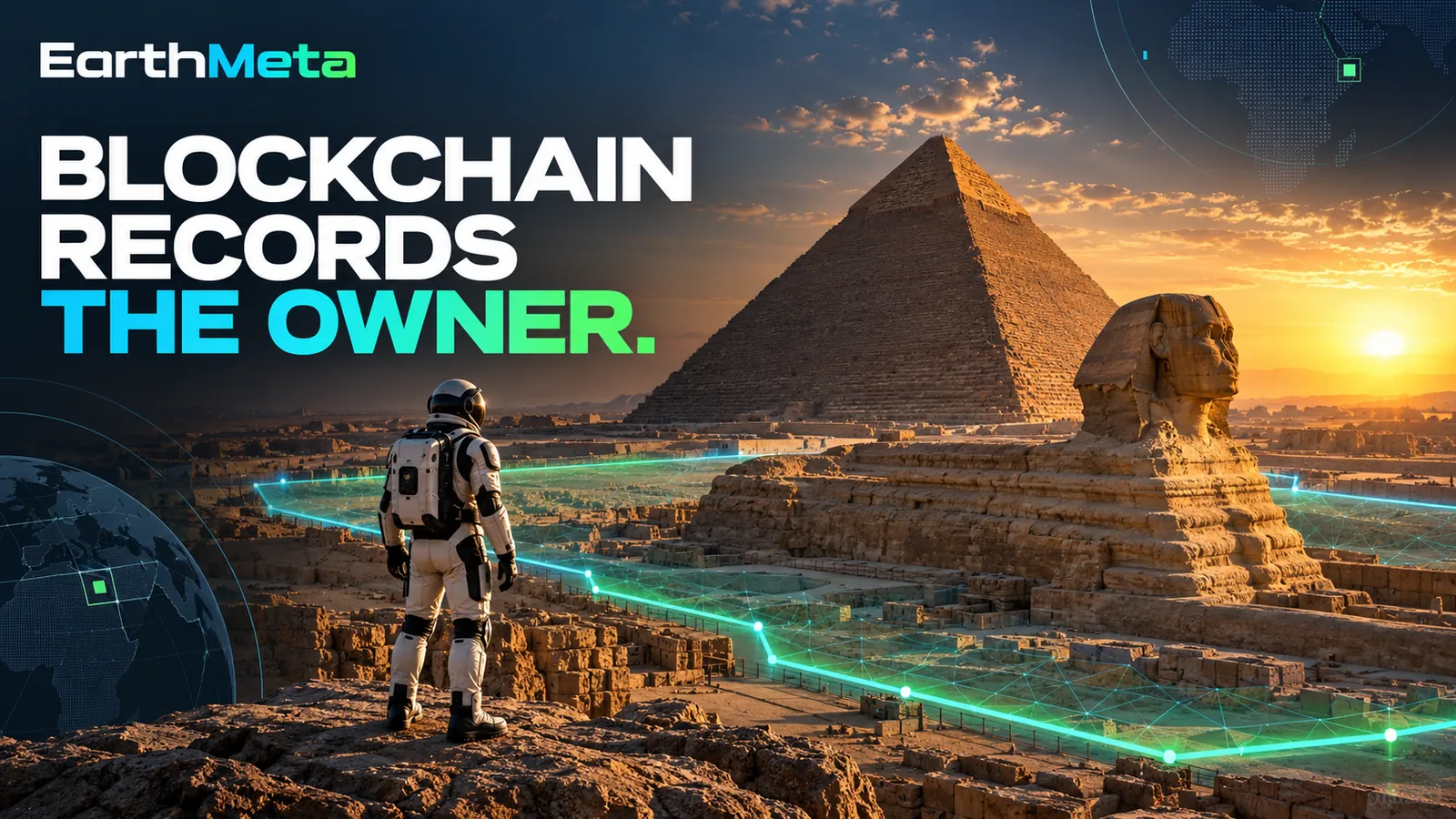
How NFT ownership works under the surface
The friendly interface might show a city card and an “Owned” label. Underneath, several technical layers cooperate.
The smart contract
The contract defines the token collection and its rules. For an ERC-721 token, each token ID is associated with one owner address. The contract also defines approvals and transfer functions.
An ERC-1155 contract can manage multiple token types in one contract. The ERC-1155 standard supports fungible, non-fungible and semi-fungible configurations. It is useful for game inventories where a world may have one unique land deed, 500 copies of a helmet and 10,000 event tickets.
Neither standard tells the world what the item should look like or how powerful it should be. They standardize ownership and transfer mechanics.
The wallet
The wallet controls the private keys that authorize actions. The token is not a file sitting inside the wallet app. The blockchain contract records the wallet address as owner, and the wallet lets the user sign transactions.
This is why recovery phrases matter so much. Whoever controls the key can usually transfer the token. A convincing profile picture, invoice or chat message cannot override a valid on-chain transfer.
The metadata
ERC-721 includes an optional metadata interface with a tokenURI. That URI can point to a JSON file describing the asset: its name, image, attributes and other information.
The metadata may be stored on a project server, on a content-addressed network such as IPFS, or through another system. Buyers should ask whether the metadata can change, who controls the URI and what happens if the hosting layer disappears.
The content files
A virtual asset may need 3D models, textures, animations, sound and interaction code. Those files are usually not stored directly in the NFT contract because blockchain storage is expensive and unsuitable for large media packages.
Decentraland’s content system, for example, stores scene and wearable files through content servers, while ownership is determined through the blockchain. Its content-server documentation makes this split visible.
The token and the content therefore need a durable link.
The platform logic
The world decides what the token can do.
Owning a land NFT might let the wallet publish a scene. Owning equipment might add abilities. Owning a city might unlock boundary tools, economic settings or governance functions. The contract proves the wallet holds the token; the platform translates that fact into utility.
The legal and product terms
Terms explain what the buyer is permitted to do with the associated content, which licences the creator keeps, which licences the platform receives and which restrictions apply.
This layer is often skipped because it is less photogenic than a 3D astronaut. It is also the layer most likely to answer the buyer’s real question.
The ownership stack: seven layers buyers should separate
“I own the NFT” can hide seven different questions.
| Layer | The practical question |
|---|---|
| Token control | Which wallet can transfer or approve the token? |
| Metadata control | Who can change the name, image or attributes? |
| Media availability | Where are the models, textures and images stored? |
| Platform utility | What can the holder do inside the world today? |
| Contract governance | Can an administrator pause, upgrade or restrict the collection? |
| Intellectual-property rights | What may the buyer copy, modify or commercialize? |
| Service dependency | What utility remains if the app, marketplace or servers stop? |
The layers may align beautifully. They may also point in seven different directions.
Tap a layer to see where it lives and who controls it
A well-designed project documents the stack in plain English and gives users simple ways to verify it.
Why people participate and spend
NFT technology does not create desire. It organizes ownership around desire that already exists.
Identity
People buy virtual fashion for the same broad reason they choose clothes, profile photos and room décor: presentation matters. A wearable can say “I was there,” “I support this creator,” or simply “this looks excellent on my avatar.”
Transferability can add confidence because the item is not necessarily trapped in one account. But resale is a secondary benefit if nobody wants to wear or use the item.
Place and belonging
Land and buildings give communities somewhere to gather. The value comes from what happens there: events, games, meetings, exhibitions, shops, experiments and social routines.
The NFT can identify the owner. It cannot manufacture foot traffic. A beautifully verified empty venue is still empty.
Creation
Builders want control over the things they make. NFTs can help creators distribute limited editions, prove collection origin and sell to users through open marketplaces.
The most sustainable creator economies do more than mint. They provide accessible tools, discovery, moderation, customer support, analytics and reasons for buyers to use the work.
Progress and achievement
Gaming items can memorialize progress or unlock future challenges. A tournament badge, crafted item or upgraded character feels meaningful because it represents time, skill or community history.
If the only path to an item is payment, it risks becoming a price tag wearing a helmet. Earned, crafted and creator-designed assets give an economy texture.
Access
Tickets, passes and membership tokens make spending easy to understand. The owner receives a defined experience or permission. The world can recognize the wallet and provide access without manually reconciling a separate list.
Economic participation
Some users want to trade, develop or promote virtual assets. This is where expectations need discipline. Activity depends on real demand, fees, platform rules, competition and continuing use. An NFT makes settlement and ownership legible; it does not create demand on its own.
Growth mechanisms: how an ownership economy compounds
A healthy virtual-world economy can develop through a series of connected loops.
Tools → creators → visitors
Better tools attract more creators, more useful spaces attract more visitors, and creator earnings justify more ambitious work. It breaks if discovery is poor or fees consume the creator’s margin.
Customize → be seen → personalize
Social visibility increases the desire to personalize, and creators respond with more styles. It breaks when assets look interchangeable or stay invisible.
Clarity → confidence → building
Clear ownership and safe transfers support long-term building. It breaks when fake collections or confusing licences make ownership hard to trust.
Events → community → content
Events, quests, games and governance give owners reasons to return. It breaks when rewards replace the experience.
Idea → scene → review
AI tools shorten the distance between an idea and a usable 3D scene; human review and world rules decide what to publish.
Own → create → invite
Own a meaningful location, create something there, invite people in and improve it over time.
The creator loop
Better tools attract more creators. More creators produce more useful spaces and items. Better content attracts more visitors. More visitors create more potential buyers. Creator earnings then justify more ambitious work.
The loop breaks if discovery is poor or fees consume the creator’s margin.
The identity loop
Users customize avatars and spaces. Other users see the results. Social visibility increases the desire to personalize. Creators respond with more styles and experiences.
The loop breaks when assets look interchangeable or are invisible in normal activity.
The ownership loop
Clear ownership and safe transfers increase confidence. Confidence supports participation in marketplaces and long-term building. A more active marketplace improves discovery.
The loop breaks when fake collections or confusing licences make ownership hard to trust.
The participation loop
Events, quests, games and governance give owners reasons to return. Repeated use creates community. Community creates feedback and content. Better content creates more reasons to return.
The loop breaks when rewards substitute for the experience instead of strengthening it.
The AI creation loop
AI tools can shorten the distance between an idea and a usable 3D scene. More people can design buildings, decorate spaces or produce variations. Human review, world rules and ownership checks then decide what is safe and useful to publish.
EarthMeta’s AI building is particularly relevant here. A city or land owner has an ownership record on one side and an accessible creation workflow on the other. The advantage comes from joining those systems: own a meaningful location, create something there, invite people in and improve it over time.
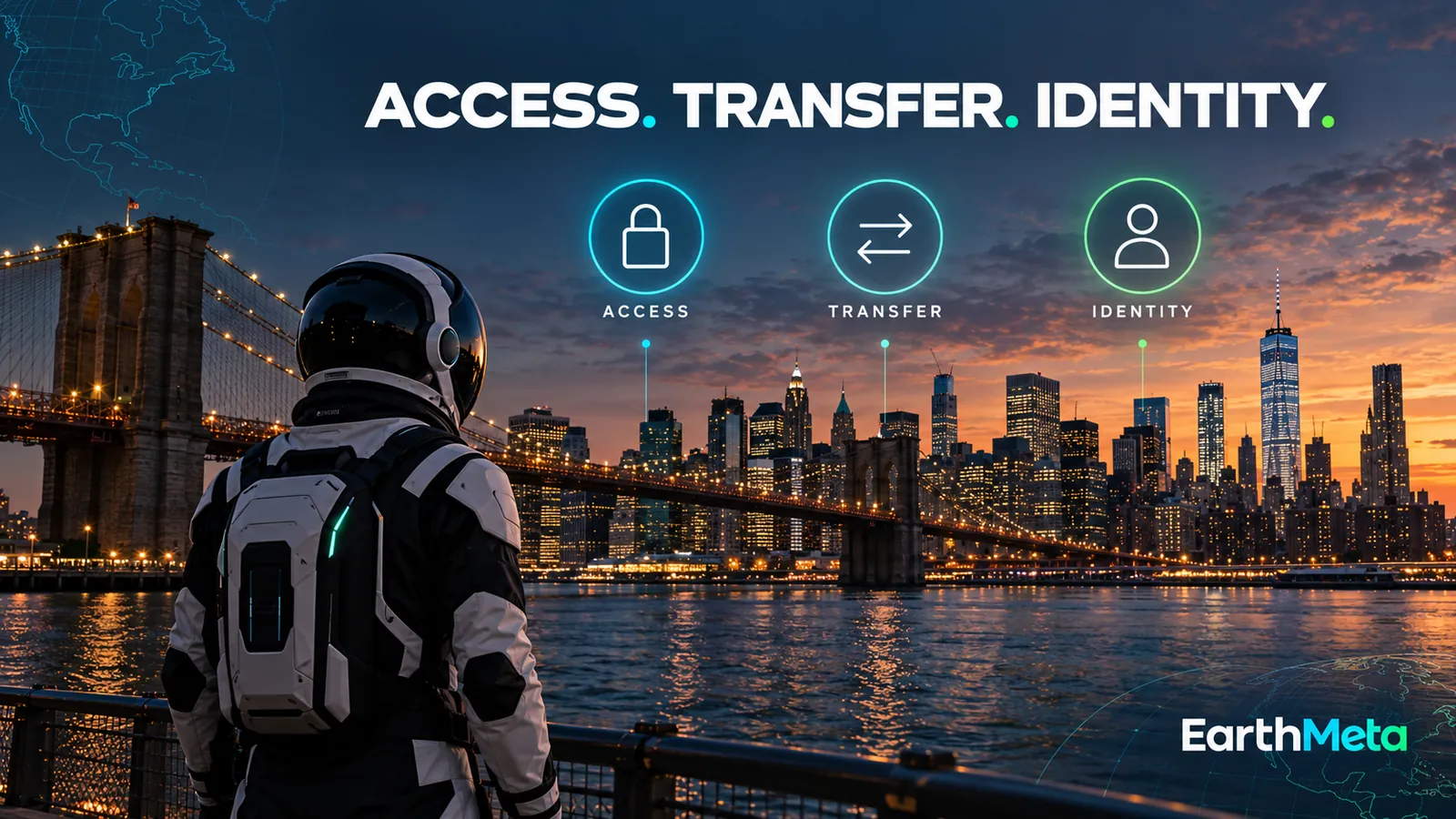
Own a place, then build on it
Explore EarthMeta’s AI building tools and shape a real city people already recognize.
Why games and virtual worlds treat NFTs differently
A game normally starts with a play loop. The item helps the player compete, explore, craft, collect or express identity. A broader virtual world may start with persistent place, creation, social activity and governance.
NFTs can serve both models, but their centre of gravity changes.
In a game, utility is tested every minute
A sword must behave like a sword. Equipment needs balance. A tradable character must not destroy fair competition. Developers may need to change attributes after launch.
That creates tension with the popular idea that an NFT should be completely immutable. A healthy game needs patches. Owners usually benefit when the game remains enjoyable, even if an item’s statistics change.
Good documentation separates immutable ownership history from adjustable gameplay properties.
In a virtual world, place and permission can matter more
Land might determine where a scene can be published. A city token may grant a governance or economic role. A building can remain a persistent identity object even when it is not part of a competitive loop.
The asset’s utility is therefore connected to discovery, tools, permissions and community activity rather than damage points.
Gaming mechanics can still strengthen a world
Quests can guide new users through the map. Collectibles can reward exploration. Competitions can showcase creators. Token-gated rooms can host community events. Achievements can create visible history.
In EarthMeta, these mechanics animate real-world geography without turning the platform into a generic game. A Paris architecture challenge, Tokyo exploration quest or Governor-hosted local event makes ownership easier to understand through action.
Platform histories: ownership needs an ecosystem around it
- Amazon
Opens its online bookstore in July.
- Decentraland
Begins as an experiment in tracking digital land ownership on a blockchain.
- EarthMeta
Public platform launch and initial city NFT phase in October, after four years of building.
- Roblox
Reports $1.5 billion in Q2 revenue.
- EarthMeta · today
City NFTs, land parcels, building NFTs and AI-assisted creation on a digital twin of Earth.
Roblox: virtual goods succeeded before NFTs
Roblox demonstrates that users do not need blockchain tokens to value digital identity or creator content. Its scale was built through creation tools, distribution, social play, moderation, payments and years of ecosystem development.
This is the lesson for NFT worlds: the token is infrastructure, not entertainment. Users stay for experiences and people.
Roblox’s economy also shows the importance of a creator payout path. Demand becomes durable when creators can justify the time required to build better content.
Decentraland: land ownership became a shared primitive
Decentraland says its concept began in 2015 as an experiment in using blockchain to track digital land ownership. Today, the ecosystem uses NFTs for LAND, estates, wearables, emotes and names, with the marketplace and community governance built around those assets.
The history matters because the world did not appear fully formed when the first land contract launched. Content tools, clients, community events, documentation and governance developed over time.
The Sandbox: assets connect players and creators
The Sandbox uses LAND and creator assets to connect building, publishing, access and play. Its documentation distinguishes tokenized equipment from temporary in-experience items and from creator files that do not need to become NFTs.
That distinction is a sign of maturity. Ownership technology works best when it is applied deliberately.
Amazon: a marketplace is a trust system
Amazon opened its online bookstore in July 1995, then spent years adding seller tools, reviews, payments, fulfilment and customer protections. Marketplace growth came from reducing friction and building trust between strangers.
NFT marketplaces face a similar product challenge. A smart contract can settle a trade, but users still need search, verification, accurate listings, support and confidence that the item will work after purchase.
EarthMeta does not need to copy Amazon, Roblox, Decentraland or The Sandbox. Their histories simply show that ecosystems are built through patient iteration. A blockchain launch is a starting point, not a graduation ceremony.
The token is not the copyright
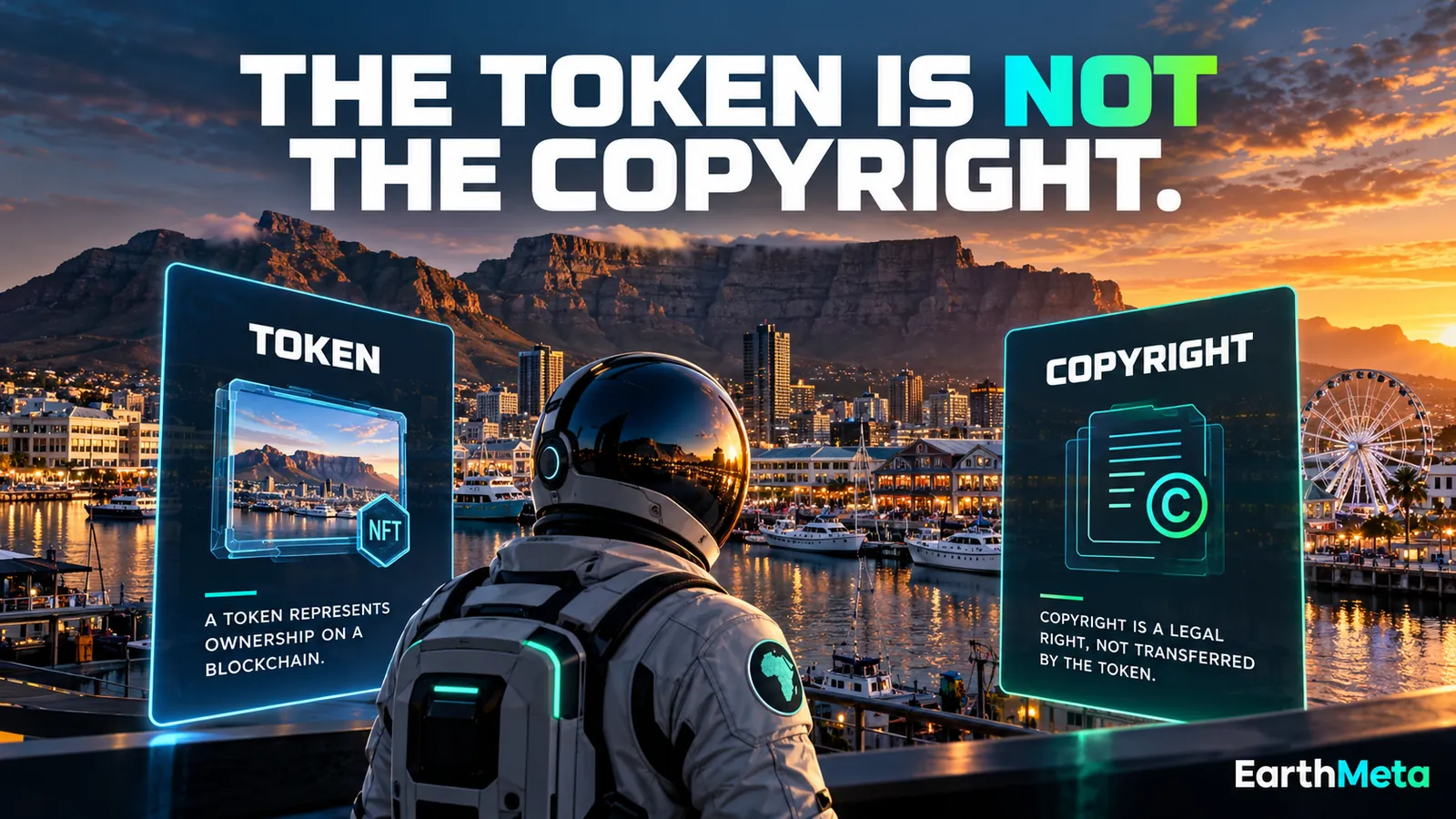
This is the most important legal distinction in the article.
Buying an NFT generally gives the buyer control of the token. It does not automatically transfer copyright in the image, model, music, brand or character connected to it.
The World Intellectual Property Organization explains in its copyright guide that selling a physical original or copy does not automatically transfer copyright; the rights usually remain with the author unless expressly assigned. The same core distinction matters for digital tokens.
OpenSea’s current Platform Terms of Service, updated 7 October 2026, state that OpenSea does not grant ownership rights to associated content and that applicable rights come from the seller, creator or other governing terms.
Different projects can grant different licences:
- personal display rights;
- permission to use an asset inside one platform;
- limited commercial rights;
- broad rights to modify and monetize;
- no content licence beyond what is necessary to view the item.
The licence may remain attached to the token, require separate acceptance or end when the token is sold.
Creators also need to understand the licences they grant to platforms. The Sandbox’s official documentation says creators own the copyright in compliant assets and experiences, while uploading public content grants the platform a broad licence to use it for operating and promoting the service.
None of this makes NFT ownership weak. It makes ownership specific.
If you buy a house, you do not acquire the architect’s copyright in the drawings. If you buy a book, you do not acquire the right to print ten thousand copies. Rights are bundles. Serious virtual worlds explain the bundle.
Metadata, storage and the “what if the platform disappears?” question
An ownership record can survive while the experience around it changes.
If the smart contract remains available on a public blockchain, a wallet may still control the token. But the 3D world, marketplace, API and media files may depend on separate infrastructure. Buyers should examine four things.
Is the contract upgradeable?
An upgradeable contract can fix problems and add features. It also means an administrator may have significant control. Neither structure is automatically good or bad. The project should disclose it.
Can the metadata change?
Dynamic metadata is useful for buildings that improve, characters that level up or land that gains new attributes. Immutable metadata is useful when collectors expect the record never to change.
The right choice depends on the product. The wrong choice is pretending dynamic data is fixed.
Where are the files?
Content-addressed storage can make tampering easier to detect. A normal web server can be fast and practical. Both require availability planning, backups and clear responsibilities.
What remains useful outside the main world?
The token may remain visible in wallets and marketplaces. Its rich functionality may still depend on the original world.
This is why “on-chain” should never be treated as a one-word durability guarantee. Ask what is on-chain, what is off-chain and how the layers connect.
Interoperability: readable is not the same as usable
NFT standards make ownership readable across applications. They do not automatically make assets usable everywhere.
A medieval sword from one game may have different dimensions, animation bones, damage rules and art direction from another. A Tokyo building may exceed a different platform’s polygon limits. A wearable designed for one avatar skeleton may float three inches above another avatar’s shoulders. The blockchain is innocent; the jacket is simply having a difficult day.
Practical interoperability requires:
- shared or convertible file formats;
- compatible avatar rigs and dimensions;
- agreed behaviour and balance rules;
- content licences allowing reuse;
- safety and moderation checks;
- a product reason for the receiving world to support the asset.
Decentraland’s linked wearables show a more realistic model. An external NFT can be mapped to a wearable representation designed for Decentraland. The ownership travels as a verification signal; the platform-specific representation is built to fit the world.
That is often more achievable than promising one universal object that behaves identically everywhere.
Security: ownership is only useful if users can protect it
Wallet-based ownership moves responsibility toward the user. That creates freedom and risk.
Fake collections
Anyone can copy a name or image. ERC-721 itself notes that contracts can share the same name and symbol. The contract address is the reliable identifier.
Projects should publish official addresses through trusted channels. Marketplaces should make verified collections and warning signals easy to understand.
Malicious approvals
A fraudulent website may ask the user to approve a contract that can move NFTs. The signature can look like a routine login.
Users should read wallet prompts, check domains, avoid unexpected links and review approvals. A hardware wallet can improve key protection but cannot rescue a user from deliberately approving a malicious transaction.
Compromised keys
If a seed phrase is stolen, the attacker can act as the wallet. No support agent should ever ask for it. High-value assets can be separated from everyday browsing wallets.
Misleading listings
A listing price is not a completed sale. An item can be listed for a heroic number without finding a buyer. Buyers should inspect recent transactions, unique participants and utility, not just the loudest price tag.
Intellectual-property infringement
A token can be authentic to its contract and still use content the minter did not have the right to tokenize. OpenSea prohibits plagiarism and IP infringement, but its own safety materials acknowledge the need for policies, detection and enforcement.
Verification must cover both the smart contract and the underlying content rights.
How EarthMeta uses NFTs as an ownership layer
EarthMeta’s design makes NFTs useful because the assets connect to recognizable geography and defined roles.
EarthMeta officially launched in 2024 after four years of building, and the roadmap dates the public platform launch and initial city NFT phase to October 2024. The platform is live, and its ecosystem keeps growing through product development and community activity.
The territory
A unique 1-of-1 asset tied to a real city. Its owner is the city’s Governor.
The plot
Boundaries drawn by the Governor, transacted as NFTs for more granular participation.
The creation
A unique NFT asset, generated with EarthMeta’s AI building tools.
City NFTs
Each city is represented as a unique asset connected to a real place. Ownership identifies the Governor role and gives the platform a verifiable wallet-to-city mapping.
This is a clearer use of non-fungibility than producing ten thousand unrelated profile pictures. Paris and Kyoto are not interchangeable. Their geography, communities, landmarks and development possibilities differ.
Land parcels
In EarthMeta, Governors draw boundaries and create land parcels that are transacted as NFTs. This creates a hierarchy: the city establishes a larger ownership and governance layer, while land parcels support more granular participation.
Clear maps, boundary integrity, marketplace discovery, construction tools and reasons for visitors to explore are what make those parcels worth a visit.
Buildings
Buildings in EarthMeta are unique NFT assets, connected with AI building generation. This is where ownership and creation reinforce each other.
The NFT records who controls the building asset. The AI tool makes creation accessible. The world places the result in a city or parcel. The marketplace supports transfer. Each layer has a specific job.
Governance and economic roles
City ownership connects to the Governor role, while the country-level President adds another geographic layer. Every city has a Governor who receives 1% of every trade in their city. Every country has a President who receives 0.5% of every transaction across the whole country. One person can hold both roles and collect 1.5% on their own city.
These percentages apply to every asset traded in the territory, whether the Governor or President owns it or not. The math is simple: $100,000 traded in a city = $1,000 tax collected by its Governor. The important point is not simply that an NFT exists. The platform recognizes the token when assigning permissions and economic functions.
See how trading activity becomes tax collected
Pick a role, or both: one person can be Governor and President.
Current features and roadmap
EarthMeta today includes city NFTs, an Ethereum ownership layer, marketplace functions, Governor and President roles, land parcel mechanics, building NFTs, AI-assisted creation, avatars, cars, augmented-reality experiences and the Marketing Hub.
Roadmap items such as expanded interoperability are labelled as roadmap until their user flows are live. Product pages evolve quickly, so always check the current app and terms before a transaction.
This is not caution for caution’s sake. Clear status language builds trust.
Why EarthMeta’s geography makes ownership easier to understand
A common weakness in virtual land is abstraction. A buyer sees a numbered square on a map and must imagine why the location matters.
EarthMeta starts with places people already recognize. A city carries cultural, commercial and community meaning before anyone builds a virtual structure. That gives EarthMeta several product strengths.
Discovery through real-world familiarity
People already know how to search for London, Cairo or Seoul. They begin with a place they understand, then explore the owners, parcels, buildings and activities associated with it.
Community formation around local identity
Local creators, tourism groups, diaspora communities and brands can gather around a familiar location. The NFT identifies the controlling asset, while the experience gives the location social meaning.
AI-assisted development
AI building tools help more owners turn a location into something visible. A city owner does not need a full 3D studio before experimenting with a space.
Quality still matters. AI lowers the starting barrier; curation, storytelling and iteration create the reason to visit.
Layered economic design
Cities, land parcels and buildings support different levels of ownership and creation. That is more flexible than asking every participant to buy the largest asset.
The relationships stay simple: what the owner controls, what the owner can create, which fees apply and what activity makes the economic model useful.
Six design principles for a strong ownership economy
1. Make every ownership right visible in the interface
An asset page should explain what is live today: transfer, building, parcel creation, governance, marketplace listing, access or promotion.
Avoid hiding essential rights inside a long document. The terms remain important, but the product can summarize them plainly.
2. Show the dependency map
Users should be able to see which blockchain holds the token, where the metadata lives, which app functions recognize it and which features are under development.
This turns a technical architecture into confidence.
3. Connect assets to repeated activity
Ownership becomes stronger when cities host events, creator showcases, challenges, shops, tours and community decisions. The goal is not constant speculation. The goal is a rhythm of use.
4. Give creators distribution, not just tools
AI helps produce buildings. Creators also need discovery, presentation, analytics and a route to interested visitors.
EarthMeta’s Marketing Hub is relevant because ownership without visibility is a quiet room. Promotion should be transparent and should not obscure organic quality signals.
5. Treat security as product design
Show verified contract addresses, clear transaction previews and warnings for unusual approvals. Help users distinguish an account login from an asset transfer.
The safer route should also be the easiest route.
6. Measure utility, not only sales
Track how owned assets are used:
- visits to city and parcel pages;
- buildings created and published;
- repeat visitors;
- event attendance;
- creator conversion;
- completed marketplace transactions;
- time from purchase to first useful action;
- Governor participation;
- support issues related to ownership.
These measures reveal whether NFTs are improving the world or merely decorating its database.
A practical NFT due-diligence checklist
Before buying a virtual-world NFT, check the following. Tick each item as you verify it.
Your verification progress
Security, always
- Are you on the correct domain?
- Does the wallet prompt match the action you intended?
- Are you approving one item or an entire collection?
- Is a separate wallet appropriate for high-value assets?
- Have you ignored anyone asking for your recovery phrase? Good. Keep doing that forever.
What NFT ownership should feel like to a normal user
The best implementation becomes almost boring.
The user connects a wallet, sees a verified asset, understands the price and fees, completes the transaction, and immediately sees what changed. The city appears in the dashboard. The building tool unlocks. The parcel controls become available. The owner can find the next useful action.
No scavenger hunt through block explorers. No mystery approval. No grand speech about decentralization before the user can find the front door.
Blockchain complexity belongs under the bonnet. Ownership clarity belongs on the screen.
EarthMeta has a natural advantage here because its objects are intuitive. People understand cities, land and buildings. The product uses that familiarity to teach wallet ownership through real actions.
See ownership in action
Explore how city ownership, land and creation connect inside a digital twin of Earth. Check the live asset page, current terms and transaction details before any purchase.
Frequently asked questions about metaverse NFTs
Why do metaverse platforms use NFTs?
They use NFTs to create unique, transferable and publicly verifiable records for assets such as land, buildings, wearables, names and tickets. The platform can read a connected wallet and give the holder the relevant utility or permission.
Does owning an NFT mean I own the digital artwork?
Not automatically. You usually control the token. Copyright and commercial rights depend on the creator’s licence, the platform terms and applicable law. Read the asset-specific rights before assuming you can copy or monetize the media.
Is an NFT the same as a digital deed?
It can perform a deed-like recording function inside a virtual-world system, but it is not automatically a government-recognized property deed. The smart contract records token ownership. The platform rules define which virtual asset and permissions are attached to it.
Can a platform take away an NFT?
A standard self-custodied NFT is controlled through the holder’s wallet and contract rules. However, a platform can moderate access to its service, stop recognizing an asset or change off-chain utility where its terms and architecture allow. Contract administrator powers also vary.
What is the difference between ERC-721 and ERC-1155?
ERC-721 is designed around unique non-fungible token IDs. ERC-1155 can manage many token types within one contract, including unique and multi-edition items. Virtual worlds may use ERC-721 for land and ERC-1155 for larger game inventories.
Are all NFT files stored on the blockchain?
Usually not. The contract may store ownership and a metadata link, while images, 3D models, textures and code live on content servers or distributed storage. Check how the project protects the connection between token and content.
Can I use a virtual-world NFT in another metaverse?
Only if the other platform chooses to support it and the files, licences and behaviour are compatible. Public token standards make ownership readable; they do not automatically make a 3D asset functional everywhere.
Why would someone buy NFT land?
Common reasons include building an experience, joining a community, hosting events, expressing identity, accessing governance tools or participating in a marketplace. Judge current utility, costs and what you plan to do with the land.
How do NFT marketplaces know who can sell an item?
The marketplace reads the smart contract to confirm the owner or approved operator, then uses a signed order and contract transaction to transfer the item when the sale completes.
Can AI-generated buildings become NFTs?
Yes, a platform can mint a token linked to an AI-assisted building asset. In EarthMeta, buildings are unique NFT assets connected with AI building generation. The project still needs clear creator rights, metadata, quality rules and a reliable connection between the token and the 3D files.
How does EarthMeta use NFTs?
EarthMeta uses NFTs to represent unique cities, land parcels and buildings within a geo-accurate digital Earth. City ownership connects to the Governor role: every Governor receives 1% of every trade in their city, and every country’s President receives 0.5% of every transaction across the country, on every asset traded there, owned or not. $100,000 traded in a city = $1,000 tax collected by its Governor.
Final verdict: ownership becomes useful when the world responds
Virtual worlds use NFTs because a public token can answer a valuable question: which wallet controls this unique asset right now?
That answer supports transfers, marketplaces, access, identity, creation and governance. It reduces dependence on one private account database and gives outside applications a common ownership signal.
But the token is only one layer. The world must still provide durable content, understandable licences, safe transactions, useful tools and reasons to participate. The creator must still make something worth seeing. The community must still show up. The product team must still do the unglamorous work of support, moderation and iteration.
EarthMeta’s strength is that ownership begins with familiar geography. A city NFT connects a wallet to a recognizable place, then opens a path toward land, buildings, AI-assisted creation, community roles and experiences. That is a more compelling future than NFTs as isolated collectibles.
The blockchain records the owner. The living world gives ownership meaning.
Sources and methodology
This guide prioritises current technical standards, official platform documentation, current terms and first-party company reporting, as of 21 October 2026. Market examples are labelled by what they actually measure; virtual-goods revenue is not presented as NFT market value. Governor and President amounts shown are examples: the tax collected depends on the trading activity in their city or country.
- ERC-721 Non-Fungible Token Standard: ownership, transfers, approvals and optional metadata.
- ERC-1155 Multi Token Standard: contracts containing multiple fungible and non-fungible token types.
- WIPO guide to copyright and related rights: buying an object or copy versus receiving copyright.
- OpenSea Platform Terms: content-rights and platform-licence distinctions; updated 7 October 2026.
- Decentraland blockchain documentation: Ethereum ownership records and virtual-asset transactions.
- Decentraland content-server documentation: NFT ownership and hosted 3D content.
- The Sandbox creator asset documentation: NFT and non-NFT creator assets, equipment and ownership uses.
- The Sandbox rights and ownership documentation: creator copyright and platform licensing.
- Roblox Q2 2026 shareholder letter: virtual-world revenue context.
- Roblox creator announcement: creator earnings for the twelve months ending 30 June 2025.
- EarthMeta homepage, About, Governor and President roles, EMT utility, Terms and roadmap: ownership model, product status, rights and October 2024 public launch.